
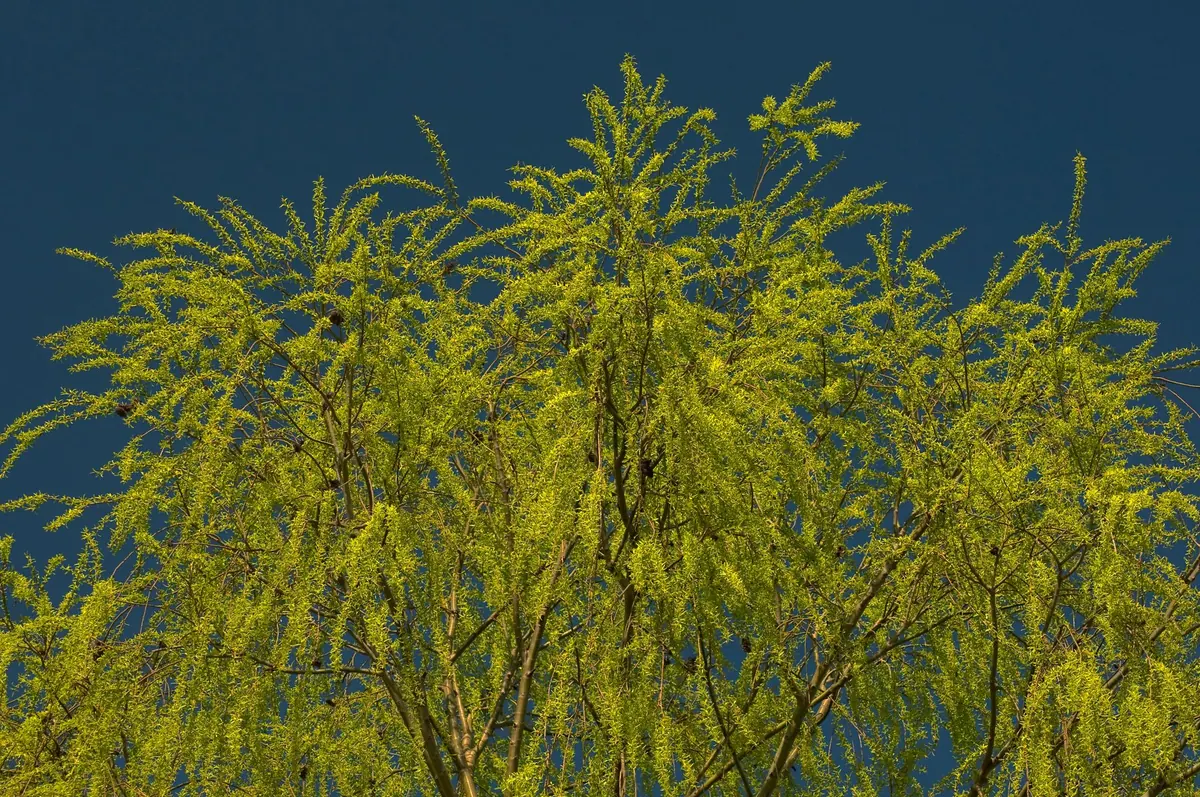
Willows are generous trees. Give them a damp corner and they will put on several feet of growth in a season, screen a boundary, drink up a boggy patch and give you catkins in early spring. That same vigour is why they run into trouble. Fast growth means soft wood, thirsty roots soon find every drain and foundation within reach, and an unhappy willow tends to advertise the fact loudly — yellow leaves, bare branches, sticky sap and weeping wounds.
The encouraging part is that most willow problems reported by UK gardeners come down to a handful of causes: water, pests, fungi and site. Here is how to tell them apart and what to do about each.
Yellowing Leaves: Read the Pattern Before You Act
Yellow leaves are a symptom, not a diagnosis. Where the colour change appears tells you most of what you need to know.
- Whole tree, pale and limp, in a wet spell: almost certainly waterlogging. Willow roots tolerate damp soil but not stagnant, airless soil. If the ground is boggy and smells sour, drainage is the problem, not feeding.
- Older leaves yellowing first, growth pale and thin: often a nutrient shortage, particularly nitrogen or iron on chalky or sandy ground. A mulch of well-rotted organic matter each spring does more good than a quick liquid feed.
- Yellowing between green veins: classic iron chlorosis, common on alkaline soils. Willows prefer neutral to acid ground, so this is a site mismatch rather than a disease.
- Sticky leaves, sooty film, ants running up the trunk: aphids. The yellowing is a side effect of sap being drained.
- Yellowing on one side only, or on the leaves facing a boundary: check for herbicide drift or spray from a neighbour before blaming the tree.
Newly planted willows often yellow in their first summer simply because the roots have not caught up with the canopy. Keep them watered properly through the first two summers and the problem usually disappears.
Dieback: When Branches Start Dying Back
Dieback shows as shoots that fail to leaf up, twigs that snap instead of bending, and dark, sunken patches on bark. On willow, the usual culprit is canker — fungal infections that get in through pruning cuts, wind damage or frost cracks and slowly girdle a branch. Willow anthracnose and willow scab both produce dark lesions and blackened young shoots, often after a wet spring.
What to do:
- Cut out infected branches well below the affected area, into clean, pale wood.
- Clean your saw or secateurs between cuts with methylated spirits or a diluted bleach solution. Canker spreads on tools.
- Do not paint the wounds. Willows seal well on their own, and wound paint traps moisture.
- Bin or burn the prunings rather than composting them, and clear fallen infected leaves from beneath the tree.
If dieback is spreading quickly from the base rather than the tips, look for honey fungus. Peel back a little bark near the base of a dead stem: white fan-shaped mycelium or black bootlace strands in the soil point to it. There is no chemical cure. Keep the tree vigorous, remove dead wood, and avoid replanting another willow in the same spot.
Aphids, Beetles and Other Pests
Willows host a lot of insects, and most of them do far less damage than they appear to. A few are worth acting on.
Giant willow aphid
These are the large, grey-brown, speckled clusters that appear on trunks and thick branches from midsummer. They produce huge amounts of honeydew, which drips onto cars, patios and anything underneath, then turns black with sooty mould. They also attract wasps, which makes them unpopular fast.
On a small tree, a strong jet of water from a hose will knock colonies off. Where wasps are a genuine nuisance, band the trunk with a sticky barrier to stop ants farming the aphids, and encourage ladybirds and hoverflies by leaving a few wild corners nearby. On a large mature willow, chemical control is usually impractical and rarely necessary — the tree copes, and the aphids vanish in winter.
Leaf beetles and sawfly larvae
Metallic blue-green willow leaf beetles and the caterpillars of willow sawflies strip leaves down to lace. Damage is usually worst in midsummer on young or stressed trees. Pick off what you can by hand, tolerate the rest, and concentrate on keeping the tree well watered — a vigorous willow will refoliate. Avoid high-nitrogen feeding, which produces soft, sappy growth that pests love.
Rust, Mildew and Sooty Mould
Willow rust shows as orange or yellow pustules on the undersides of leaves in late summer, often followed by early leaf fall. It thrives in humid, crowded conditions. Rake up fallen leaves, thin congested growth to improve airflow, and water at the roots rather than over the foliage. Some willow cultivars resist rust far better than others, so if you are planting, ask about resistance.
Powdery mildew leaves a white, dusty coating on leaves in dry summers. Sooty mould, by contrast, is the black film that grows on honeydew from aphids. Wash it off with a hose where you can, and treat the insects underneath — the mould itself is harmless.
Site, Soil and Root Trouble
Half of all willow problems are planting problems. Willows want moist but moving soil, full sun, and room. Planted in heavy, compacted clay with no drainage, they sulk and yellow. Planted in a dry border, they struggle through summer and attract every pest going.
Roots are the other issue. A mature willow will travel a long way in search of water, which makes it a poor choice within a few metres of drains, foundations, paving or a neighbour's boundary. If you suspect willow roots are affecting a building, speak to your insurer and a qualified arboriculturist before touching the tree. Cutting roots carelessly can destabilise a large willow, and felling or major pruning may need permission: check with your local planning authority whether the tree is covered by a Tree Preservation Order or sits in a conservation area.
A Quick Willow Health Check
- Look at the leaves first — pattern and position tell you more than colour alone.
- Feel the soil 15cm down. Bone dry or waterlogged both cause yellowing.
- Inspect the trunk base for dark lesions, weeping patches, white mycelium or bootlaces.
- Check the undersides of leaves for aphids, rust pustules or webbing.
- Look up. Dead wood over a path or shed is a safety issue, not a cosmetic one.
When to Call in an Arborist
Pruning a young willow is a job you can do yourself: cut back in late summer where you can, avoid heavy cuts in spring when the sap is rising and the tree bleeds freely, and take out crossing or rubbing branches while they are still thin. Pollarded willows need cutting on a regular cycle, every year or two, or the regrowth becomes top-heavy and dangerous.
Call a qualified arboriculturist for anything above head height with a saw, any work near power lines, and any tree with large dead limbs, a hollow trunk or a lean that has changed recently. A professional inspection costs far less than a fallen limb, and they can confirm whether canker or honey fungus is beyond saving. Willows are tough, forgiving trees. Get the water and the pruning right, and most of the problems above simply stop being problems.
Photo: David Henry / Pexels